


These fine art landscape photography prints start as traditional photographs: actual black-and-white negatives on 6x6 cm medium-format film, not digital files with filters. I shoot in forests and mountains, seasides and meadows (mostly quiet places), working with just 12 exposures per roll. That's the discipline. Every composition has to count.
Why film photography? Silver gelatin film captures a wider tonal range than digital sensors, preserving subtle gradations in fog, low or hard light, and long exposures. Its random grain structure, uneven silver halide crystals, creates three-dimensional micro-contrast and depth impossible to replicate in postproduction’s uniform noise algorithms. Digital lacks film’s organic dynamic range latitude, resulting in flatter shadows and compressed highlights.
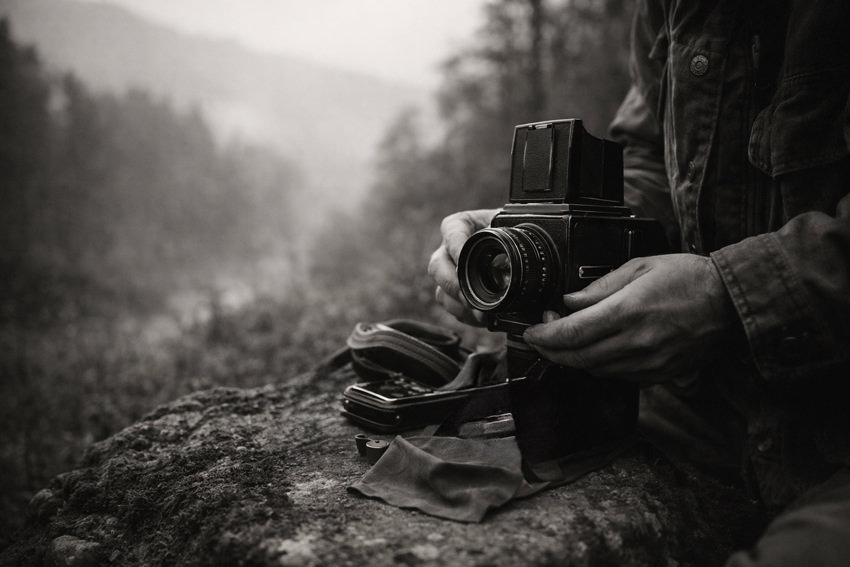
After each shoot, I hand-develop the negatives in my darkroom using traditional chemistry refined through continuous practice and experimentation. This hands-on approach, from exposure to final print, means every landscape photograph bears the mark of individual craftsmanship rather than automated photo production.
Every fine art print uses Canson Infinity Platine Fibre Rag 100% cotton acid-free paper, providing the aesthetic and feel of the original Baryta Fibre paper. Archival pigment inks rated for 250+ years of longevity by independent laboratory Wilhelm Imaging Research, specializing in the scientific evaluation of the permanence and preservation of traditional analog and digital photographic and imaging materials.
My black-and-white landscape photo prints are perfect for collectors, interior designers, and anyone who values traditional craftsmanship over convenience. You're getting authentic analog work of museum quality from shutter to print, each one signed and ready to frame however you choose.
Choosing Fine Art Landscape Photography for Your Space
The square format from my 6x6 cm negatives means you don't wrestle with horizontal-or-vertical decisions. Black-and-white landscape prints work in virtually any interior because they complement existing colors rather than compete with them. The key is matching print size to viewing distance and choosing compositions that fit your design aesthetic. Most people worry about getting the size wrong. Here's how to find the right fit for your space.
Landscape Prints for Living Rooms & Main Spaces
Start with 30x30 cm or 40x40 cm prints. They anchor the seating area and draw the eye upward, making ceilings feel higher. For large walls above sofas, try two 30x30 cm prints spaced 15-20 cm apart. This approach works better than one oversized piece.
For modern interiors with clean lines, minimalist compositions with negative space work beautifully. Think single trees against sky, or simple horizon lines. In traditional spaces, more detailed forest scenes with complex branch structures add depth and classical elegance.
Landscape Photos for Bedrooms & Private Areas
Go smaller here. The 20x20 cm or 30x30 cm formats suit intimate spaces better. You want presence without visual noise. Forest scenes with soft light create sanctuary atmosphere. The gentle blur from long exposures (trees swaying, clouds drifting) introduces subtle movement that's calming rather than stimulating.
Consider placing a print on the wall opposite your bed. You'll wake up to it every morning. The monochromatic palette won't disrupt sleep, while the natural subject matter psychologically connects indoor spaces with outdoors.
Landscape Art Prints for Offices & Work Spaces
The 30x30 cm size sits well above a desk. It's substantial enough to provide visual breathing room without competing with your screen. Studies show viewing nature, even photographs, for just 40 seconds restores directed attention and reduces mental fatigue, as found in University of Melbourne research (2015) and related studies like Berto (2005). For example, mountain landscapes and stark compositions with strong contrast help maintain focus during work sessions.
Choosing Prints By Interior Style
For minimalist and Scandinavian interiors, simple compositions with lots of negative space complement the design philosophy. Modern and contemporary settings can handle dramatic contrasts and bold compositions. The square format fits naturally here. Traditional and classic rooms call for timeless scenes with balanced compositions, often enhanced with wider mats (8-10 cm) and wooden frames. Industrial lofts benefit from nature as counterpoint to hard surfaces, especially in larger sizes like 40x40 cm. In eclectic environments, these neutral prints anchor colorful schemes. Hang prints 145-160 cm from the floor to put the center at eye level when standing. Not sure where to start? Order the 20x20 cm size first. You can always go larger, but you can't make a print smaller.
Landscape Print Sizes & Specifications
I start every landscape photograph with a high-resolution drum scan from the original black-and-white film negative. This captures the full tonal range and grain structure that makes film distinctive.
The printing uses a 12-color pigment inkjet system on the Canson paper I detailed earlier. Each color separates into individual ink channels, which produces smoother tonal gradations than standard 4-color or 8-color systems. The pigment inks bond with cotton fibers rather than sitting on the surface. This prevents the fading and color shift you see with dye-based inks.
The cotton fiber construction also prevents the yellowing and degradation that wood-pulp papers develop over time. That 250+ year archival rating? It's longer than most oil paintings maintain their original appearance.
Standard sizes: 20x20 cm (7.9x7.9"), 30x30 cm (11.8x11.8"), 40x40 cm (15.7x15.7")
Custom sizes available for larger installations or specific framing requirements. Contact me with your dimensions for pricing and production timeline.
All prints ship unframed with a certificate of authenticity documenting the materials, print date, and edition information.
Museum-Quality Standards & Guarantee
I've been shooting and printing professional black-and-white landscape photography for 18 years. I was trained in traditional darkroom techniques that most photographers abandoned when digital took over. Every print in this collection reflects that foundation. From the film I expose in the field to the final quality inspection before shipping, each piece demonstrates hands-on craft.
My art work meets museum and gallery standards for archival permanence. I don't outsource printing or development. This entire process happens in my darkroom and digital environment, where I control every variable from chemical formulation to tonal adjustments and toning.
The craft matters because the results matter. Film photography demands pre-visualization and patience. With limited exposures per location, every composition must be carefully considered. This discipline produces intentional, contemplative landscape photographs that reward extended viewing. These aren't automated reproductions, but individual photographic prints made the way fine art photography has been made for over a century.
If you're not satisfied with your print, I accept returns within 14 days of delivery for a full refund. The print needs to be in original condition (unframed, undamaged). I want you to love what you receive.
Prints ship worldwide in rigid tubes with protective materials. Each includes a certificate of authenticity with my signature.
Contact me with questions before ordering. I respond within 24 hours.
Frequently Asked Questions About Landscape Photography Prints
Should I choose black and white or color for landscape photography prints?
Black and white landscape prints work in more interiors than color prints because they complement any color scheme without competing. Color landscape prints require careful coordination with wall colors, furniture, and textiles, which limits placement flexibility. Black and white creates a timeless, sophisticated look that won't feel dated as design trends change. The monochromatic palette also emphasizes composition, texture, and tonal range rather than relying on color for impact. For collectors and designers, black and white landscape photography maintains stronger resale value and broader appeal across different interior styles.
Do landscape photography prints look better on canvas or paper?
Fine art landscape photography prints look significantly better on archival cotton paper than canvas because paper preserves the full tonal range, fine detail, and grain structure that canvas texture obscures. Canvas printing flattens subtle gradations in fog, shadows, and highlights that make black and white landscape photography compelling. The canvas weave creates a textured surface that competes with the photograph's organic grain structure, reducing the three-dimensional quality that film photography provides. Paper prints under glazing protect the image surface while allowing direct viewing of fine details down to individual grain structures. Canvas stretches and sags over time, especially in fluctuating humidity, while archival paper maintains dimensional stability for 250+ years. Canvas works well for painterly digital art with bold colors and simple compositions, but undermines the precision and subtlety that defines fine art photography.
How long do archival landscape photography prints actually last?
Properly displayed archival landscape prints last 250+ years without visible fading or deterioration. This longevity requires UV-protective glazing (museum glass or acrylic), indirect lighting rather than direct sunlight, and stable humidity between 30-50%. The Wilhelm Imaging Research rating of 250+ years applies to prints using archival cotton paper with pigment inks under museum display conditions. By comparison, standard photo prints on wood-pulp paper fade within 10-20 years. Dye-based inks deteriorate even faster. Store unframed prints in acid-free sleeves away from light and humidity for indefinite preservation.
Why do fine art landscape photography prints cost more than posters?
Fine art photography prints cost $150-450 vs $20-50 for posters because they use archival materials with 250+ year lifespan, individual craftsmanship, and professional printing processes that posters lack. Posters are mass-produced on wood-pulp paper with dye-based inks that fade within 5-10 years. Fine art prints use 100% cotton fiber paper with pigment inks, drum-scanned from original film negatives, and printed individually using 12-color systems. The price reflects materials ($15-45 per print depending on size), skilled labor (scanning, color separation, quality control), and the photographer's artistic expertise. You're purchasing museum-quality artwork with documented longevity, not disposable décor. A $200-400 fine art print that lasts 250+ years costs less per year of enjoyment than a $30 poster replaced every decade.
How should I frame black and white landscape photography prints?
Use acid-free mats, UV-protective glass, and solid wood or metal frames rated for archival preservation. The mat should create 5-10 cm of breathing room around the print (wider for larger prints). Museum glass with 99% UV filtration prevents fading while reducing glare. Avoid regular glass, which offers no UV protection. White, cream, or black mats work best with black and white landscape photography—colored mats distract from the image. Frame depth should accommodate the print, mat, backing board, and glazing without compression. Professional framers can ensure archival standards, or buy pre-made frames meeting Conservation Quality standards for DIY installation.
Do landscape photography prints need matting, or can I frame them without mats?
Landscape photography prints need acid-free matting to prevent moisture damage. The mat (typically 5-10 cm width) creates protective space between the print surface and glazing, allowing air circulation that prevents condensation, mold growth, and pigment transfer that occurs when prints contact glazing directly. Without matting, temperature fluctuations cause the print to expand and contract against the glass, leading to surface damage over time. For aesthetic purposes, matting also creates visual breathing room that enhances the viewing experience, the neutral border focuses attention on the photograph and provides elegant presentation. White, cream, or black mats work best with black and white landscape photography; colored mats distract from the image. Wider mats (8-10 cm) suit larger prints and traditional interiors, while narrower mats (5-6 cm) complement modern minimalist aesthetics.
What's the best lighting for displaying landscape photography prints?
Use indirect LED lighting with 3000-4000K color temperature and 150-300 lux brightness for optimal viewing without UV damage. Position LED picture lights 30-45 cm above the print at a 30-degree angle, or use track lighting aimed from the side to minimize glare. Avoid direct overhead lighting that creates harsh shadows and reflections on glazing. Natural indirect light from windows works well during daytime if prints aren't exposed to direct sun. LED bulbs produce minimal UV radiation compared to halogen or fluorescent options, preventing long-term fading. Dimmer switches let you adjust brightness for different times of day.
What hanging hardware do landscape photography prints need?
Framed landscape photography prints up to 40x40 cm need two D-ring hangers with braided picture wire rated for 15-20 kg, hung on wall anchors or picture hooks appropriate for your wall type. For drywall, use picture hooks with hardened steel nails angled 45 degrees downward (supports 15-20 kg). For plaster walls, install wall anchors first, then screw hooks into anchors. Brick or concrete requires masonry anchors with screws. Position D-rings one-third down from the top of the frame (not at the very top) for stable hanging. Use braided stainless steel picture wire, not nylon cord which stretches over time. The wire should create a 30-45 degree angle when pulled taut for optimal weight distribution.
Can I hang landscape photography prints in direct sunlight?
Never hang landscape photography prints in direct sunlight, even with UV-protective glass, as prolonged UV exposure causes irreversible fading. Direct sunlight delivers concentrated UV radiation that degrades pigments faster than diffused indoor light. UV-protective glass blocks 97-99% of UV rays but cannot eliminate all damage from intense, sustained exposure. Ideal placement receives indirect natural light or artificial lighting only. If your desired wall gets direct sun, use blackout curtains during peak hours, or choose that location for less valuable décor. Even archival prints rated for 250+ years will fade within 10-15 years in direct sunlight.
Do black and white landscape prints work with colorful room décor?
Black and white landscape prints work exceptionally well in colorful rooms because they provide visual balance without competing for attention. The neutral palette acts as a sophisticated counterpoint to vibrant walls, textiles, or furniture, creating balance rather than adding more color that could overwhelm the space. In rooms with multiple competing colors, black and white photography unifies the design by introducing a calm, grounding element that lets colorful pieces shine. The key is matching the print's tonal range to your room's energy level—high-contrast dramatic landscapes with deep blacks complement bold jewel tones (emerald, sapphire, ruby), while softer gray-scale prints with subtle gradations suit pastel schemes.
What if I order the wrong size landscape print for my space?
If you order the wrong size, most fine art photographers accept exchanges within 14 days if the print remains in original unframed condition, though you'll typically cover return shipping costs. Before ordering, use the two-thirds rule: your print should occupy 60-75% of the wall space above furniture to look proportionally correct. Measure your wall space and multiply by 0.65 to find the ideal print size. For example, a wall space of 50 cm calls for a 30-35 cm print. Create a newspaper template at the dimensions you're considering and tape it to the wall—live with it for 2-3 days to confirm the scale feels right. Most buyers underestimate rather than overestimate what size they need, so when uncertain, lean toward the larger option.
How long does it take to receive landscape photography prints after ordering?
Custom-printed landscape photography prints typically ship within 7-10 business days after order confirmation. Production involves drum scanning the film negative, color-separating across 12 ink channels, printing on archival cotton paper, quality inspection, and packaging in rigid tubes with protective materials. Shipping time depends on destination: domestic delivery takes 2-4 business days, international shipments arrive within 7-14 business days via tracked courier. Custom sizes requiring special paper orders may need 2-3 weeks total. All orders include tracking numbers and insurance for the declared value.